
Sending CAD to Nigeria? The gap between the best and worst provider can mean over NGN 15,000 on a single transfer. Here is exactly which apps win, which ones quietly take your money, and how to compare before every send.
The best way to send money from Canada to Nigeria in 2026 is through Lemfi, Taptap Send, or Sendwave. All three charge zero transfer fees and offer CAD to NGN rates within 1–1.5% of the mid-market rate. On a CAD 500 transfer, the best provider gives your family roughly NGN 500,000. Your bank? More like NGN 435,000. That NGN 65,000 difference is real money — and it disappears silently every time you hit "send" without comparing first.
Let us start with a confession. Most people sending money from Canada to Nigeria are overpaying. Not because they are careless, but because the entire remittance industry is designed to make the cost invisible. You see "zero fees!" and your brain says "free!" Your family's bank account says otherwise.
The good news: once you understand how this works, you can fix it in about 60 seconds before every transfer. This guide covers everything — how rates work, which apps actually win, step-by-step instructions, and the traps to dodge. Use CheckRate's free CAD to NGN comparison tool before your next transfer to see who is winning today.

Why Your Canadian Bank Is the Wrong Tool for This Job
Here is a sentence your bank does not want you to read: for international transfers to Nigeria, your bank is almost certainly the most expensive option available to you.
A typical Canadian bank (TD, RBC, Scotiabank, BMO, CIBC) charges a wire transfer fee of CAD 25–50 per transaction. Then they apply an exchange rate that sits 5–10% below the mid-market rate — the "real" exchange rate you see when you Google "CAD to NGN." According to the World Bank's Remittance Prices Worldwide database, the global average cost of sending USD 200 is still above 6% — with banks consistently the most expensive channel.
Let us run the numbers on a CAD 1,000 transfer:
| Method | Fee | Rate (NGN/CAD) | Family Receives |
|---|---|---|---|
| Canadian bank wire | CAD 35 | ~930 NGN | ~899,550 NGN |
| Lemfi | CAD 0 | ~1,003 NGN | ~1,003,000 NGN |
| Taptap Send | CAD 0 | ~1,000 NGN | ~1,000,000 NGN |
| Sendwave | CAD 0 | ~994 NGN | ~994,000 NGN |
*Rates as of May 2026. Check CheckRate for live figures.*
That is a difference of over NGN 100,000 on a single CAD 1,000 transfer. Not over a year of transfers — on one transfer. If you send monthly, that gap compounds into real, significant money that either reaches your family or funds your bank's quarterly earnings report.
We are not angry. We are just saying there is a better way.
How CAD to NGN Exchange Rates Actually Work
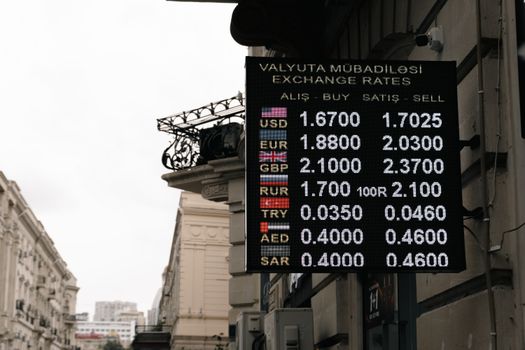
Before we dive into the best apps, you need to understand one thing that almost nobody explains clearly: the exchange rate IS the fee, even when the fee says zero.
Every provider — from your bank to the shiniest app on the App Store — starts with the same number: the mid-market rate. That is the actual exchange rate between Canadian dollars and Nigerian naira, the one that exists in the global currency market. You can see it right now by Googling "CAD to NGN." As of May 2026, it is hovering around 994–1,010 NGN per Canadian dollar.
No remittance provider gives you the mid-market rate. They offer you that rate minus their margin. The margin is how they make money. The size of that margin is what separates a good provider from a greedy one. For a full breakdown of how this works, read our remittance fees explained guide.
The math:
NGN 15,000 is invisible on your transaction summary. There is no line that says "we took this." It just quietly does not show up in your recipient's account.
This is why comparing the estimated receive amount — the actual naira that lands — matters far more than the transfer fee alone.
The 3 Best Apps to Send Money from Canada to Nigeria in 2026
The Canadian diaspora remittance market in 2026 is largely dominated by three providers for the CAD to NGN corridor. Here is an honest breakdown of each.
Lemfi — Best Overall for CAD to NGN
Lemfi was built specifically for African diaspora corridors, and it shows. The app is clean, customer support is actually responsive (a low bar in this industry, but they clear it), and their CAD to NGN rate is consistently at or near the top.
As of May 2026, Lemfi offers around NGN 1,003 per Canadian dollar with zero transfer fees. They support all major Nigerian banks including GTBank, Access, Zenith, UBA, and First Bank. Transfers typically complete same-day on weekdays.
Best for: Anyone sending regularly to Nigerian bank accounts. Strong customer service makes them the safest choice if something ever goes wrong.
Regulated: Canadian MSB (Money Services Business) registration with FINTRAC + FCA-authorised in the UK.
Taptap Send — Best Rate Consistency
Taptap Send has earned a loyal following among Nigerian-Canadians for one reason: their rate is reliably competitive, day after day. They do not have the flashiest marketing but their technology is solid and their regulatory credentials are serious — regulated by the FCA (UK) and multiple European financial authorities.
They frequently sit within a few naira of Lemfi on CAD to NGN. On some days they edge ahead; on others Lemfi wins. This is exactly why you compare before every transfer rather than picking one provider and sticking with it forever.
Best for: Senders who prioritise the absolute highest naira amount and want a set-and-forget-style experience once they have the app set up.
Regulated: FCA (UK) + multiple European jurisdictions.
Sendwave — Best for Mobile Money Recipients
Sendwave (part of Wave) pioneered zero-fee transfers on African corridors and remains a strong option in 2026. Their rate is typically a few naira per dollar behind Lemfi and Taptap Send, but they have one feature the others do not: mobile wallet delivery.
If your recipient uses OPay or PalmPay rather than a traditional bank account, Sendwave is your best option. Transfers to mobile wallets arrive in seconds — faster than any bank deposit option. For everyone else, their bank deposit rates are competitive but rarely lead the table.
Best for: Recipients using OPay, PalmPay, or other mobile wallets. Also good for first-time senders who want the simplest possible experience.
Regulated: Registered in the US and UK.
Head-to-Head Comparison: CAD 500 Transfer to Nigeria
| Provider | Rate (NGN/CAD) | Fee | Estimated Receive | Speed |
|---|---|---|---|---|
| Lemfi | ~1,003 | CAD 0 | ~501,500 NGN | Same day |
| Taptap Send | ~1,000 | CAD 0 | ~500,000 NGN | Same day |
| Sendwave | ~994 | CAD 0 | ~497,000 NGN | Minutes |
| Canadian Bank | ~930 | CAD 35 | ~448,250 NGN | 2–5 days |
*Rates as of May 2026 — use CheckRate for today's live figures before sending.*

How Much Can Your Family Actually Receive? (Real Numbers by Amount)
One thing competitors rarely show you is how the math scales. Here is what today's rates look like across common transfer amounts:
| You Send (CAD) | Best Provider Delivers | Canadian Bank Delivers | Difference |
|---|---|---|---|
| CAD 100 | ~100,300 NGN | ~89,500 NGN | ~10,800 NGN |
| CAD 500 | ~501,500 NGN | ~448,250 NGN | ~53,250 NGN |
| CAD 1,000 | ~1,003,000 NGN | ~893,500 NGN | ~109,500 NGN |
| CAD 2,000 | ~2,006,000 NGN | ~1,787,000 NGN | ~219,000 NGN |
The larger your transfer, the more the gap matters — because the FX margin is a percentage, not a flat amount. If you are sending CAD 2,000 to cover school fees or a medical bill, using a bank instead of Lemfi or Taptap Send is leaving NGN 219,000 on the table. At the current naira price of groceries, that is a meaningful amount of food, utilities, or medication.
How to Send Money from Canada to Nigeria: Step by Step
Never done this before? Here is the full process using any of the three providers:
Weekday transfers to major Nigerian banks (GTBank, Access, Zenith, UBA, First Bank) typically credit within minutes to a few hours. Weekend transfers may not credit until Monday morning due to Nigerian bank system maintenance windows, even if the money has technically "arrived."

5 Tips to Get the Best CAD to NGN Rate Every Time
This is the section competitors always write as filler. We are going to make it actually useful.
1. Compare before every single transfer — not just sometimes
Rates shift daily, sometimes hourly. Lemfi might lead today; Taptap Send might lead tomorrow. The five seconds it takes to open CheckRate and compare all three before you send is the highest-return five seconds in your financial life. Seriously — at NGN 10,000+ difference per transfer, your "hourly rate" for that comparison is absurd.
2. Send midweek if timing allows
Monday through Thursday typically gives you tighter exchange rate spreads than Friday through Sunday. Currency liquidity is higher on weekdays when major trading desks are active. Not a massive difference, but if your family does not need the money on the weekend urgently, a Monday morning transfer is marginally better value than a Saturday afternoon one.
3. Use Interac e-Transfer, not debit card
Card payments cost providers money in processing fees (typically 1–2%). Some of that gets baked into a slightly worse exchange rate. Where you have the option of Interac e-Transfer, always use it. Same-day, typically free, and your rate stays tight.
4. Enter the account details right the first time
A wrong NUBAN account number does not mean the transfer fails. It often means it succeeds — and credits someone else. Getting it reversed requires a formal bank recall process that can take weeks and is not guaranteed. Copy-paste the account number from a message from your recipient. Do not type it by hand.
5. Batch where it makes sense
If you normally send CAD 150 twice a month, consider sending CAD 300 once a month instead. Even with zero-fee providers, consolidating reduces the number of times you are subject to FX spread. And with one verification touchpoint instead of two, there is less that can go wrong.
The "Zero Fee" Trap Nobody Warned You About
Here is the thing: the three providers we recommend — Lemfi, Taptap Send, Sendwave — genuinely are among the most competitive in the world on this corridor. Their zero-fee model works in your favour because they keep their exchange rate margins tight.
But "zero fee" is not a category. It is a marketing choice. A provider can offer zero fees while hiding a 5% FX margin in the exchange rate and still look great in the headline. You would never know unless you compared the estimated receive amount.
The test is simple: whatever provider you are using, Google "CAD to NGN" and look at the rate that appears. Now compare that to what your provider is offering. If the gap is under 1.5%, you are in good shape. If it is 3% or more, that "zero fee" is costing you more than a paid-fee provider with a tighter rate would.
This is why CheckRate's default sort order is "best receive amount" — not "best rate" and not "lowest fee." The receive amount is the truth. Everything else is marketing. Nigeria receives over USD 20 billion in remittances annually according to World Bank data — making every naira saved collectively significant for the Nigerian economy and for individual families.

Frequently Asked Questions
What is the cheapest way to send money from Canada to Nigeria?
In 2026, Lemfi and Taptap Send are consistently the cheapest options for CAD to NGN transfers. Both charge zero transfer fees and offer rates within 0.5–1% of mid-market. The winner on any given day changes — use CheckRate to compare estimated receive amounts in real time before you send.
How long does it take to send money from Canada to Nigeria?
With Lemfi, Taptap Send, and Sendwave, weekday transfers to Nigerian bank accounts typically complete within minutes to a few hours. Weekend transfers may be delayed until Monday due to Nigerian bank maintenance windows. Mobile wallet delivery via Sendwave (OPay, PalmPay) arrives in seconds.
What details do I need to send money to Nigeria from Canada?
You need: your recipient's full legal name (exactly as it appears on their bank account), their Nigerian bank name, and their 10-digit NUBAN account number. Getting the name or account number wrong can send funds to the wrong person, so double-check before confirming.
Is it safe to send money to Nigeria through apps like Lemfi and Taptap Send?
Yes. Lemfi holds Canadian MSB (Money Services Business) registration and is FCA-authorised in the UK. Taptap Send is regulated by the FCA (UK) and licensed across multiple European jurisdictions. Sendwave is registered in the US and UK. All three operate under proper financial regulatory frameworks.
When is the best time to transfer money from Canada to Nigeria?
Monday through Thursday gives you marginally better exchange rate spreads than weekends, when liquidity thins. Avoid Friday evenings through Sunday if you can, both for rate reasons and because Nigerian bank maintenance windows over the weekend can delay crediting.
What is the best way to send a large amount of money to Nigeria from Canada?
For larger transfers (CAD 2,000+), Lemfi and Taptap Send remain the best options. Both handle large amounts with competitive rates and no additional fee tiers. You may be asked for enhanced verification (source of funds documentation) for very large transfers — this is a regulatory requirement, not a red flag. Compare on CheckRate at your exact intended amount, since some providers have rate tiers that change at higher amounts.
Can I send money directly to OPay or PalmPay in Nigeria from Canada?
Yes — Sendwave currently supports OPay and PalmPay as delivery options for Nigeria. Transfers arrive in seconds. Lemfi and Taptap Send primarily deliver to traditional bank accounts, so if your recipient does not have a conventional Nigerian bank account, Sendwave is your best option.
*Ready to find the best rate for your next transfer? Compare CAD to NGN rates live on CheckRate — free, no sign-up, updated regularly. Also see: how exchange rate margins work and tips to get the best CAD to NGN rate.*
CheckRate Editorial Team
The CheckRate team tracks live exchange rates across the top diaspora remittance providers. We compare fees, rates, and estimated receive amounts so you can send more money home.